Director: Choi Yoon-jin
Starring: Yoo Hae-jin, Lee Je-hoon, Son Hyun-joo, Choi Young-joon, Byron Mann
Country of Origin: South Korea
Running time: 1h 44m
The ubiquitous clear spirit of soju is the great leveller in South Korea.
As the nation’s unofficial alcoholic drink of choice, it unites people from every different social class and background.
Affordable and omnipresent it can be found almost everywhere from supermarkets to restaurants and the thousands of convenience stores dotted across the country.
It usually features quite prominently in most Korean drama shows and films – especially in company dinners, scenes of friends talking things out or drowning their sorrows – yet it is rarely the main subject matter.
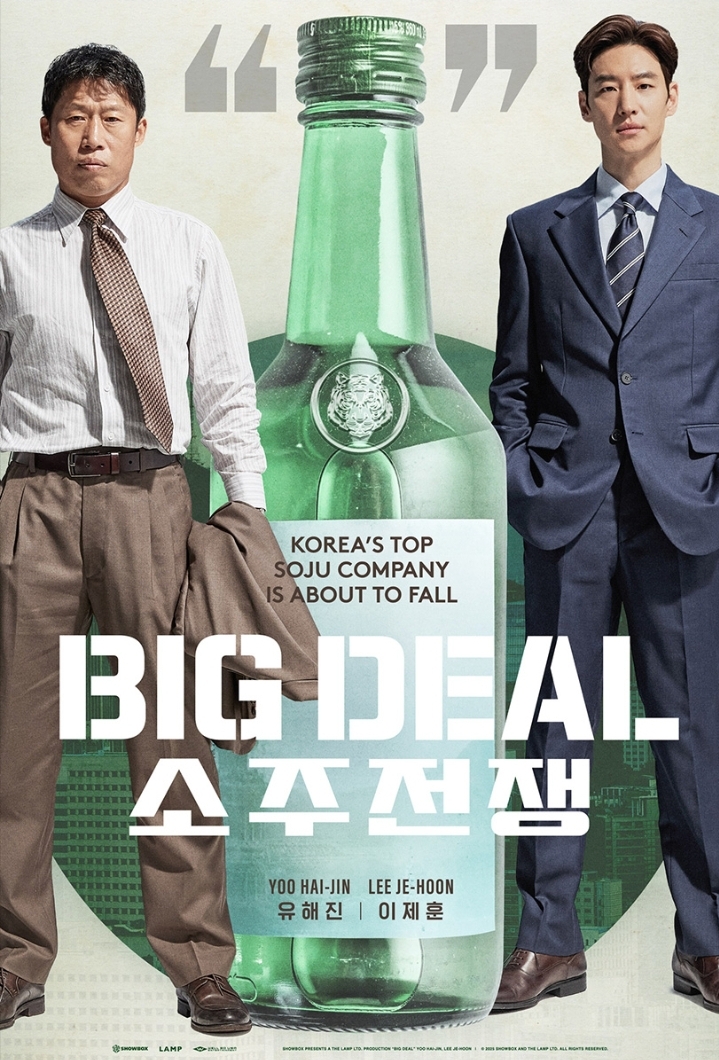
In Big Deal the fate of South Korea’s largest soju company hangs precariously in the balance.
The Gukbo group produces millions of bottles of the liquor yet is on the verge of going out of business during the 1997 Asian financial crisis.
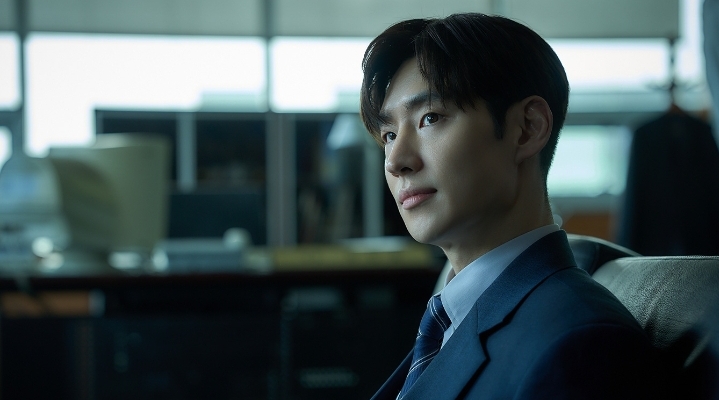
Global investment firm Solquin plans a takeover led by single-minded young numbers analyst Choi In-beom (Lee Je-hoon).
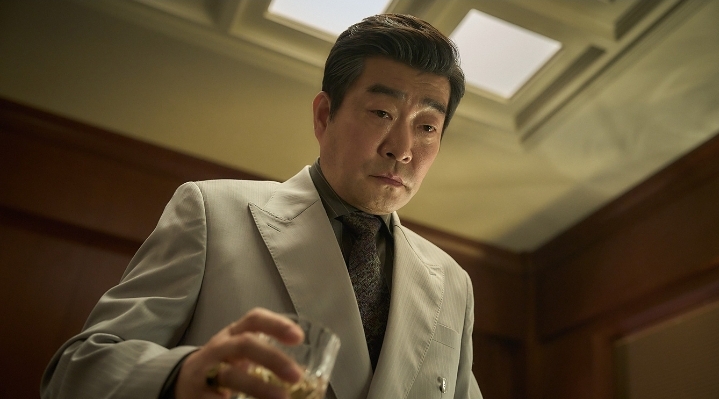
Gukbo director Pyo Jong-rok (Yoo Hae-jin) is placed at the head of the negotiations by demanding company owner Seok Jin-woo (Son Hyun-joo).
As talks begin the loyal and affable Pyo develops a strong bond with aspiring financial mogul In-beom.
However, nothing is quite as it seems as the bid to gain control of the largest soju producer in Korea encounters several obstacles and hitches.
There is an abundance of monetary terminology and legalese in a film set mainly in boardrooms and the courtroom.
The presumption that the audience will be clueless about the financial jargon leads to dictionary-like definitions appearing on screen.
This is not only unnecessary but rather distracting.
For all its financial chicanery, backstabbing and double dealing the movie’s most bankable asset is the relationship between ultimate company man Pyo and the win at all costs In-beom.
They develop an almost father-son relationship especially in the initial stages of the deal making process.
It emerges that Pyo’s wife and daughter left him as he devoted more time to the company than his family. In-beom’s father passed away 10 years previously and he attended the prestigious Seoul National University before studying and working in the United States for a decade.
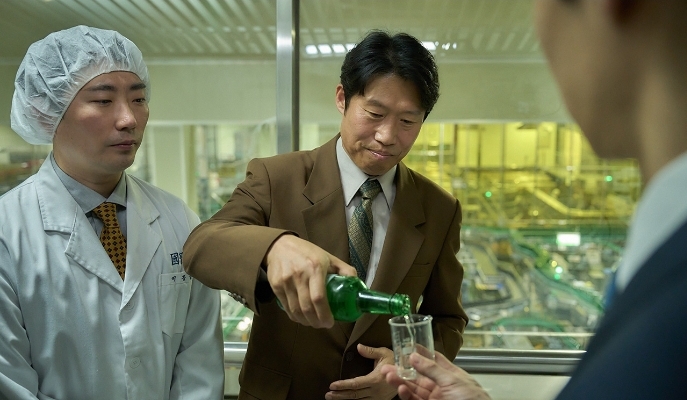
There is a fantastic sequence in which the proud director shows the young high-flyer around the Gukbo soju factory. As bottles clink around the enormous conveyor belt In-beom reluctantly tries a new flavour of soju as Pyo and the factory workers eagerly anticipate his reaction.
A long day ends at a barbecue restaurant with the youthful numbers man getting drunk and joining Pyo as an ad-hoc marketing salesman, complete in Gukbo branded uniform, urging other customers to sample their latest soju concoction.
After stumbling home, the pair connect further with a vigorous early morning hike to recover.
Later, In-beom attempts to console Pyo after the model worker narrowly avoids a tragedy.
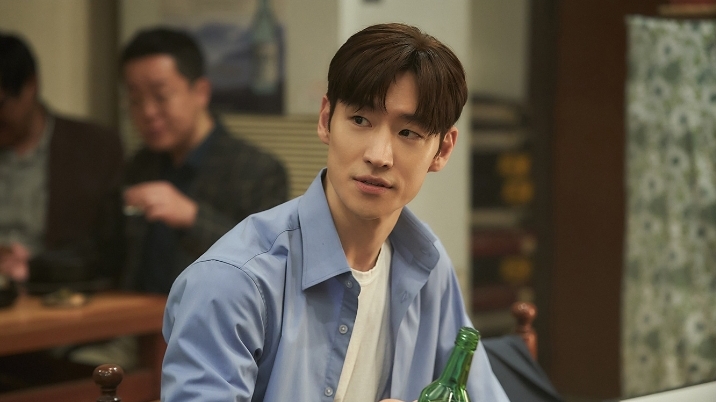
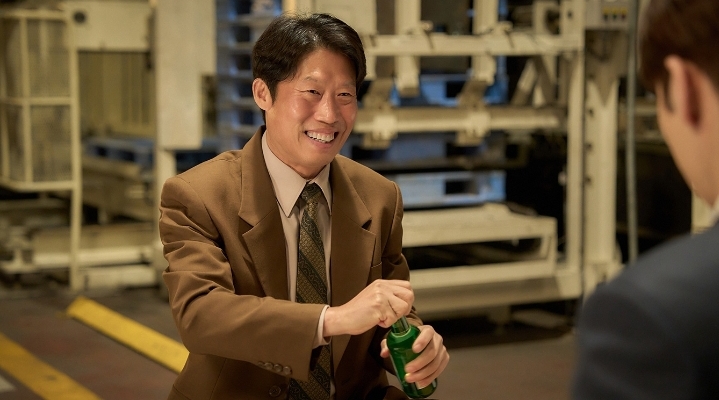
Only a select few scenes feature the two main players, but these provide the backbone to a film that spends far too much time on the back and forth of the negotiating table.
You have to wonder what happened in the editing process as there is an overemphasis on the wheeling and dealing, especially in forgettable segments involving the English-speaking characters of the Solquin group.
Several scenes could have been trimmed or sacrificed entirely and although Lee Je-hoon shows that he has a great command of the English language, the same cannot be said for Byron Mann as the Hong Kong branch manager of the global investment firm.
A rather crude script dictates that he peppers his exchanges with repeated profanities. Mann does his best with the material but after dropping a number of superfluous f-bombs his character loses virtually all credibility.
The saving grace is the always dependable and persuasive Yoo Hae-jin, perhaps one of the more underappreciated actors in modern Korean cinema history. Whether in a lead role, as a supporting player or even in a minor part he is never anything but compelling. Yoo is a reassuring and convincing presence as a troubled everyman so dedicated to his work that he has lost everything else in his life.
Lee Je-hoon’s portrayal of the arrogant, power-hungry In-beom adds credence to the plausibility of the takeover attempt – the story draws on the real-life monetary troubles of the Jinro soju company – and deserves some acclaim.
Big Deal – titled the far more appropriate Soju Wars in Korean – comes to life when the pair are sharing a drink rather than ironing out the minute details of an overly complicated company acquisition and is worth watching solely for their scenes together.
@skasiewicz.bsky.social
 Stephen Kasiewicz