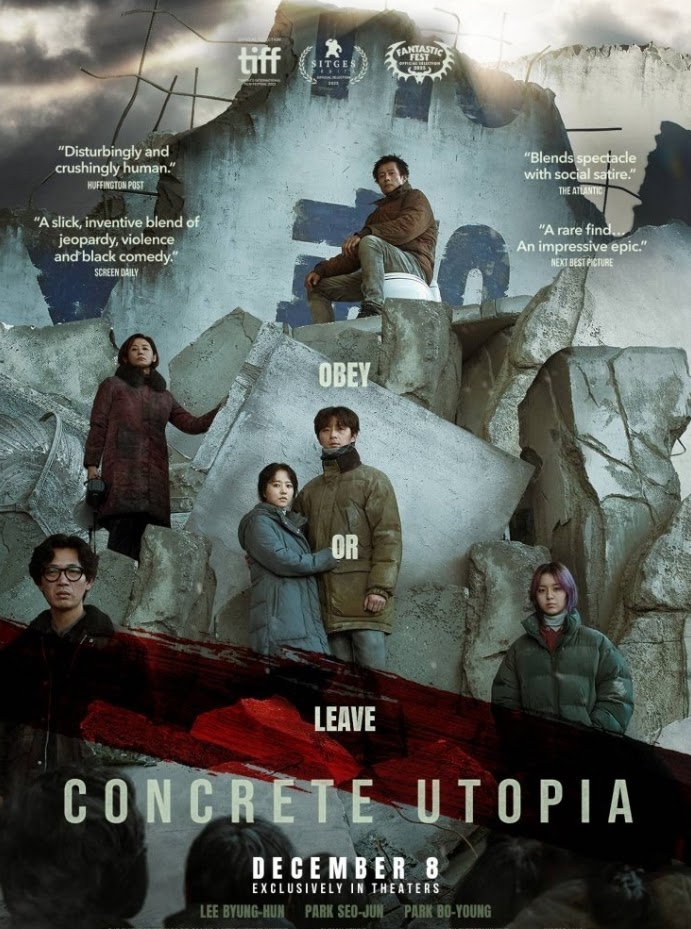
Director: Um Tae-hwa
Starring: Lee Byung-hun, Park Seo-joon, Park Bo-young, Kim Sun-young, Park Ji-hu
Country of Origin: South Korea
In the vast Seoul metropolis, towering apartments are as conspicuous as coffee shops and convenience stores.
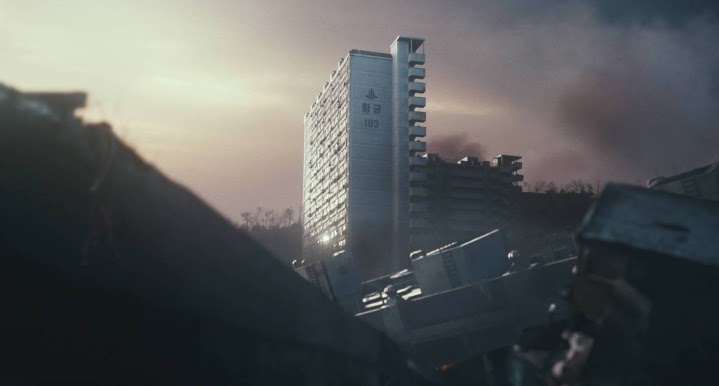
Yet when a catastrophic earthquake devastates the South Korean capital only one building remains standing.
The residents of the Hwang Gung apartments fortuitously emerge unscathed while the rest of the most populated city in the country is decimated.
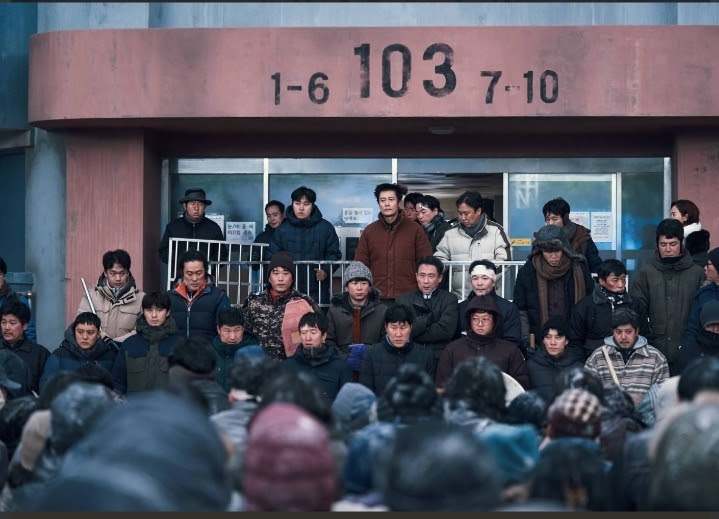
Compelled by a desperate mix of panic and self-preservation, the 219 Hwang Gung inhabitants unanimously vote to remove those who fled to the last place of refuge and prevent any other outsiders from gaining entry to their property.
Organised by the forceful president of the apartment women’s association Geum-ae (Kim Sun-young) the simple ballot also elects the brave but taciturn Yeong-tak (Lee Byung-hun) as de facto leader of the group.
Sceptical civil servant Min-seong (Park Seo-joon) reluctantly becomes the head of the building’s anti-crime unit after a violent confrontation expels all non-residents into the freezing winter cold.
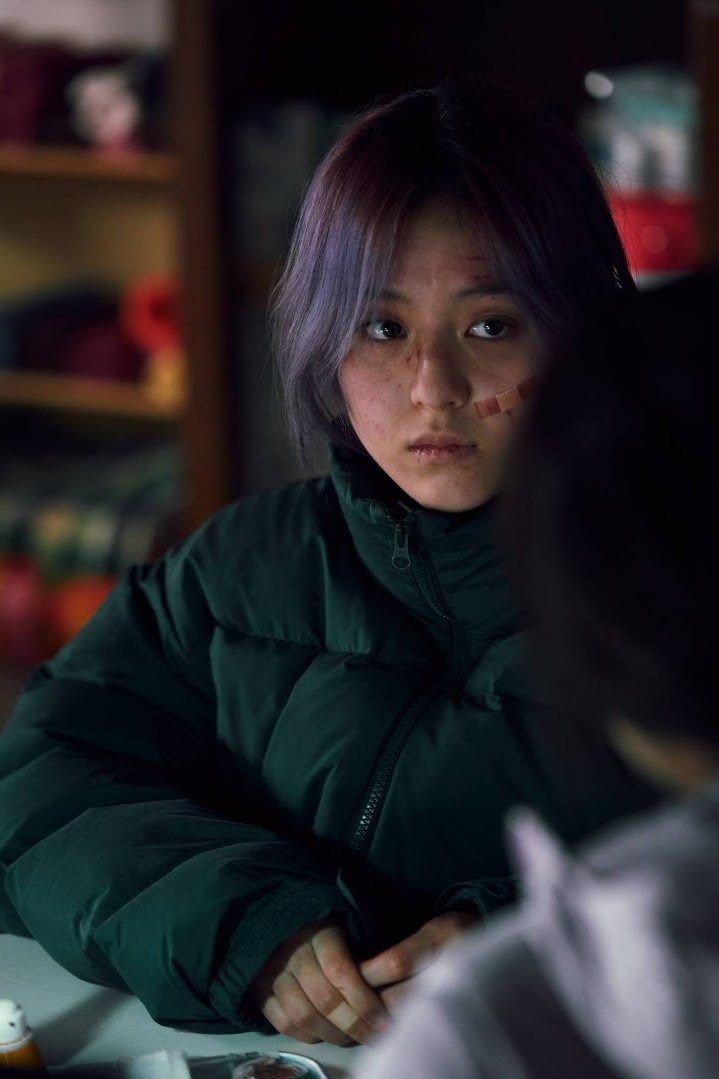
As the fortunate collective attempt to restore a degree of normalcy under the tyrannical guidance of Yeong-tak the arrival of unaccounted resident Hye-won (Park Ji-hu) casts doubt on the credentials of the Hwang Gung kingpin.
In what descends into an infernal nightmare the ferocious competition for accommodation is replaced by a wretched desire to simply stay alive.
While Concrete Utopia has undeniable elements of disaster and survival movies, director Um Tae-hwa makes a scathing social commentary on the struggle to vault up the housing ladder.
The film’s ironic title points to the inherent rivalry in a society where status is supposedly defined by securing an apartment in a desirable area of Seoul.
It begins with real footage of apartment lotteries, as new high-rises are billed as a solution to the housing shortage in a mammoth city which dominates a small country. Advertised as convenient and luxurious, the constant development of even swankier buildings inevitably leads to greed, jealousy and one-upmanship. Snooty neighbours and squabbles over school districts are mentioned as reasons for the Hwang Gung camp to send escapees from the nearby Dream Palace apartments to fend for themselves as the temperature plummets to -26°C.
Plausible computer manufactured effects illustrate the horror of an unthinkable natural disaster, as the River Han dries up in a barren landscape stripped of all landmarks except the Namsan Tower.
In the grim apocalyptic wasteland the search for supplies supersedes survivors, as the residents have enough food and water for just a single week. Min-seong is forced into a gruesome climb over broken ruins and dead bodies as part of a patrol which discovers a food court under the rubble while kids scramble to play with teeth like marbles, extracted from the mouths of rotting corpses.
It’s definitely not for the faint hearted, yet amid the rations, barricades and slogans, one incredibly off-kilter interlude stands out.
Geum-ae, played wonderfully by Kim Sun-young, speaks directly to camera in a warped commercial for the newly established paradise enclave.
The fourth wall comes tumbling down as she enthusiastically outlines the Hwang Gung practices and guidelines. In a polished performance her smile never wavers as she explains a strict rule which forbids anyone from leaving the building without permission and a hysterical demonstration on sanitation. Min-seong cheerfully squats on a makeshift toilet in front of the assembled group to show them how to dispose of their business. It’s a brief moment of comic relief – as residents poop in plastic bags and hoist them into a gargantuan hole in the ground - in a sequence which could easily be interpreted as a parody of a propaganda video produced by North Korea.
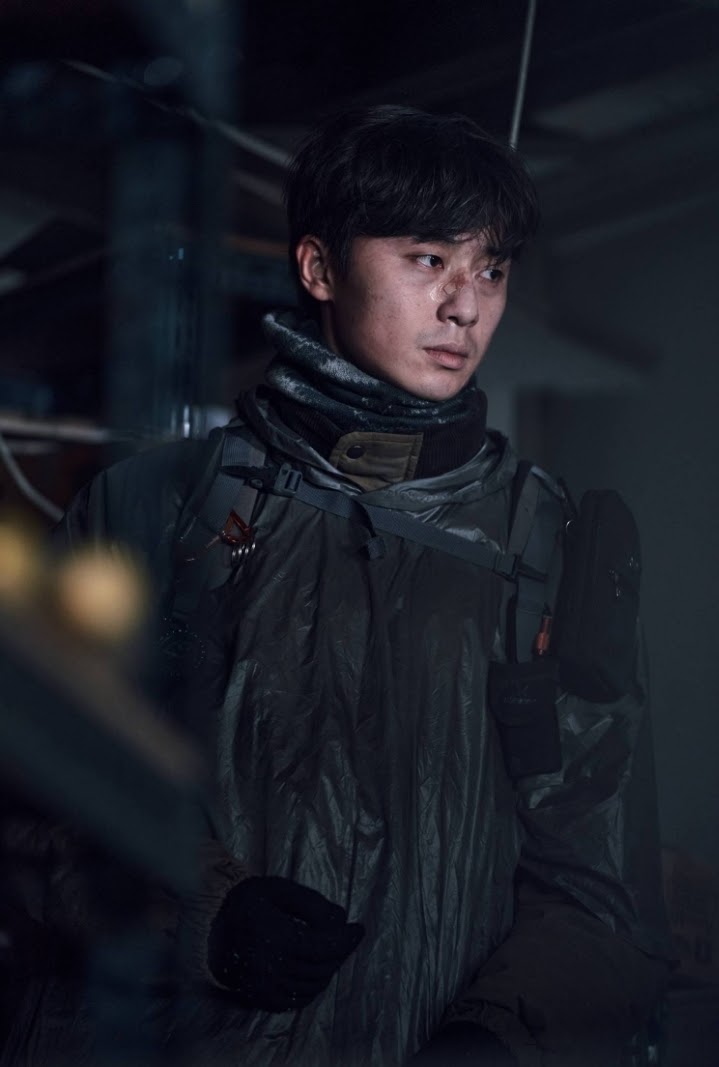
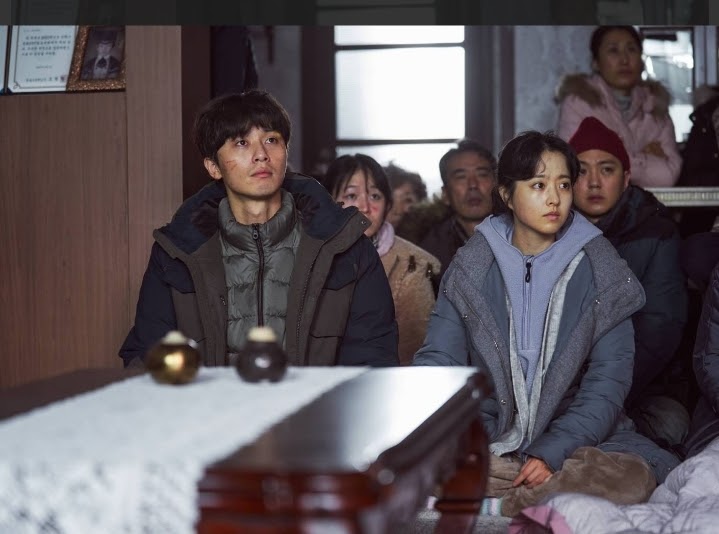
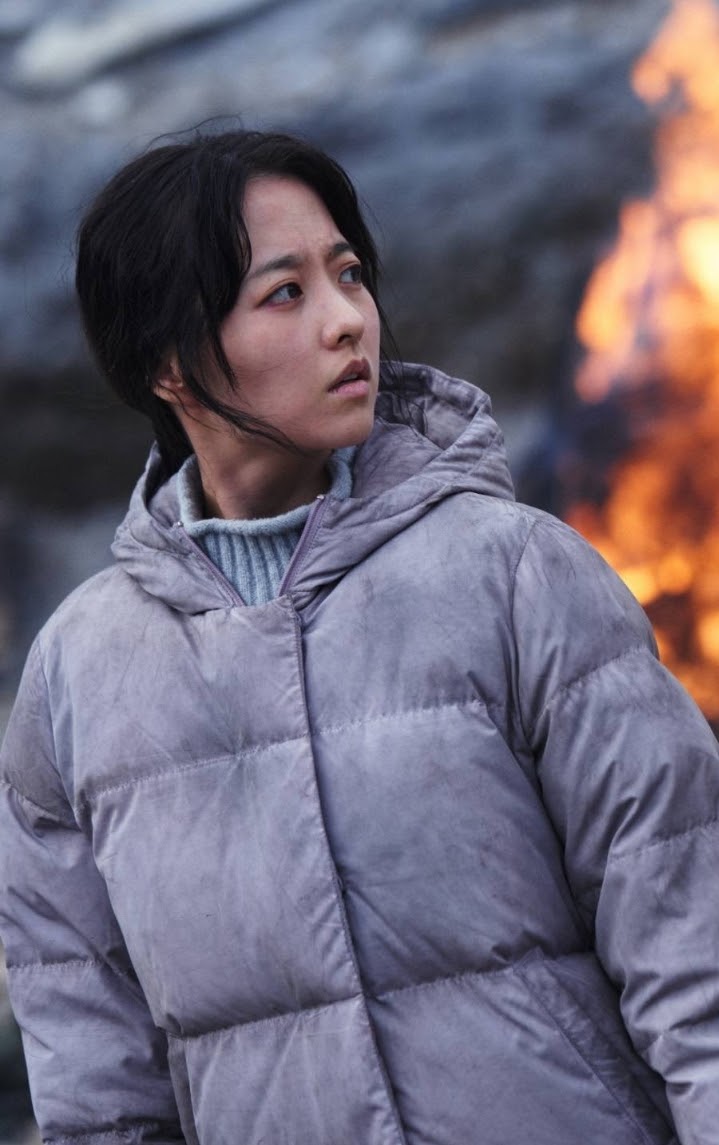
Park Seo-joon excels as a bewildered everyman thrust into an unaccustomed position of power. Initially terrified and unconvinced he’s caught up in the fervour of the resistance movement while attempting to protect his empathetic wife Myeong-hwa, a nurse whose gentle compassion is convincingly portrayed by the superb Park Bo-young.
Although Park has built up an accomplished resume with a list of leading roles, he takes second stage to established screen superstar Lee Byung-hun.
Lee has long been part of the South Korean acting elite along with fellow luminaries Song Kang-ho, Jung Woo-sung and Hwang Jung-min, and delivers another awe inspiring performance.
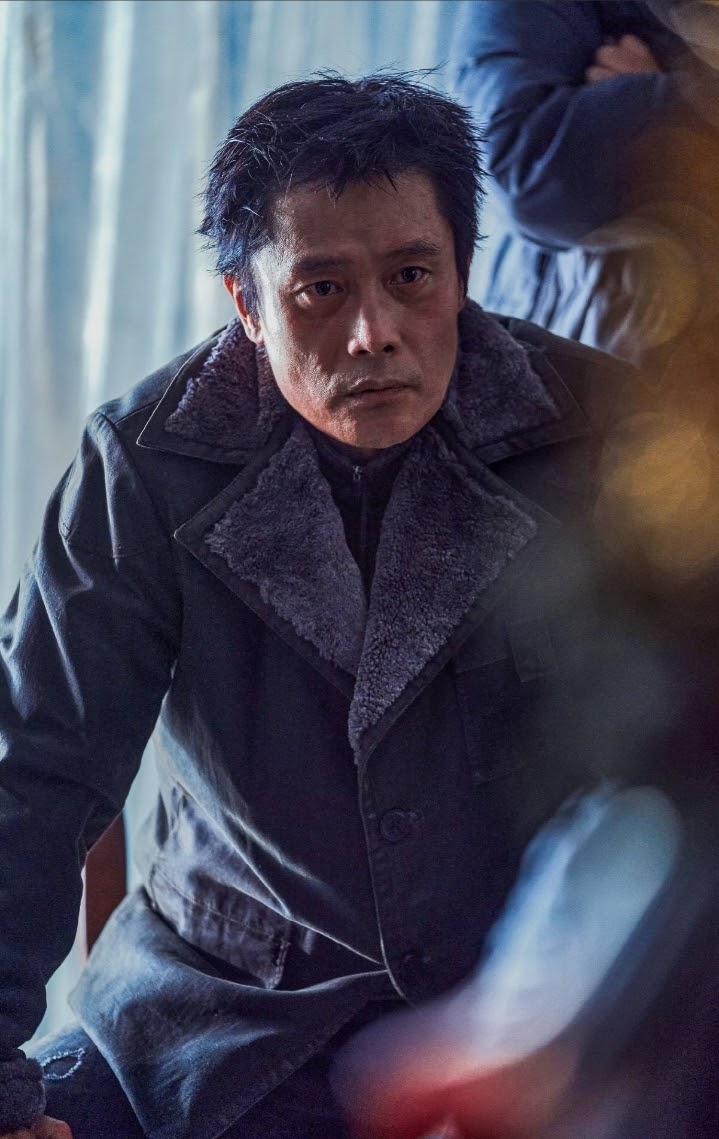
From a pensive, courageous remainer that risks his life to save a fellow resident in a fire consumed apartment he transforms into a maniacal, bloodthirsty commander in chief.
Outsiders are labelled cockroaches as he plays Yeong-tak with a savage intensity, consumed by a twisted form of patriotism. He resembles a Nazi officer remorselessly hunting down perceived enemies as red paint is smeared on doors to mark supposed intruders. Drunk on power as the head of the survival cult his troubled background gradually emerges as an already disastrous state of affairs degenerates.
It’s a breathtaking depiction of a broken man clinging on until the very end as everything else crumbles down around him.
 Stephen Kasiewicz