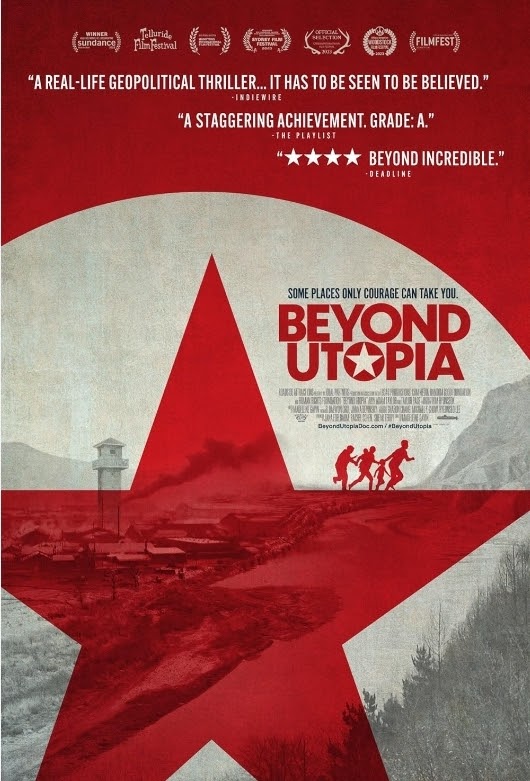
Director: Madeleine Gavin
Country of Origin: United States
The Kim dynasty features prominently in almost every documentary made about North Korea.
Depressingly sensational tales of brutal control and lavish excess often completely ignore the country’s largely impoverished 26 million population.
All filmmakers allowed access to the most isolated nation on earth are bound by the regime’s stern censorship code.
Nobody moves or talks without the approval of the ruling authorities.
Barring a handful of exceptions – which include A State of Mind (2004), The Red Chapel (2009) and Under the Sun (2015) – people stuck in a country where everything is excruciatingly monitored remain voiceless.
Only defectors can speak freely without facing dire consequences.
The fortunate few that find a way out of the hermit kingdom usually share their experiences from the safety of South Korea.
Beyond Utopia takes an unprecedented and enthralling approach as it details the experiences of two separate escape journeys.
Using cell phones and hidden cameras director Madeleine Gavin somehow manages to follow the Roh family – a father, mother, two young girls and their 80-year-old grandmother – as they make the incredibly precarious trek from China through Vietnam, Laos and Thailand on the path to freedom.
Soyeon Lee, a defector in South Korea, can only wait by the telephone as she relies on brokers to help her 17-year-son navigate a danger-filled route after crossing the Yalu River into China.
Seoul based Pastor Seungeun Kim links the two stories together. A one man force of nature, he has spent the last two decades assisting North Koreans who risk their lives to flee the closed off authoritarian nation.
It’s a deeply personal cause for Pastor Kim, who met his North Korean wife on his first mission as a priest in China, close to the border with the Democratic People’s Republic of Korea (DPRK), as it is officially known.
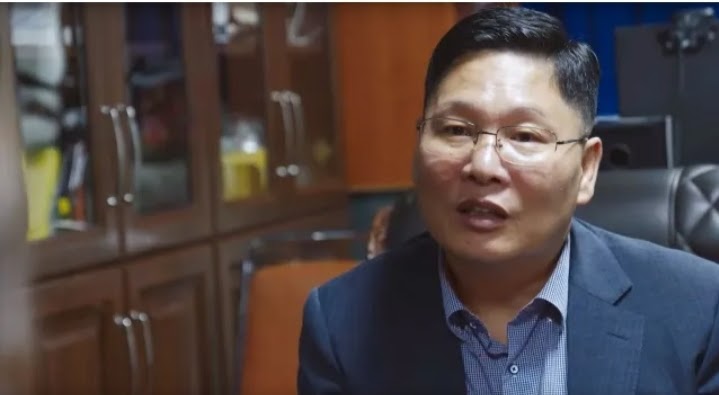
In one of the few light hearted moments in an intensely affecting film the Pastor’s wife jokes that she was attracted to him as she thought he resembled Kim Jong-il.
The Pastor speaks with candour and courage when it’s revealed that the couple’s 10-year-son died and that they refocused their efforts to rescue as many people as humanly possible after his passing.
In what is a jaw dropping and miraculous feat of filmmaking we are first shown footage of the Roh family in a desperate situation, worn out, hungry and fearing that they will be sent back to North Korea after navigating a path across the Yalu River.
A Chinese farmer takes pity on them and provides temporary refuge but the tearful faces of the girls pleading for help makes for haunting viewing.
A relative of the Roh family appeals to the Pastor to intervene. If they are caught they could be banished to a labour camp or stripped of all their belongings and left to fend for themselves in an inhospitable mountain area in the DPRK.
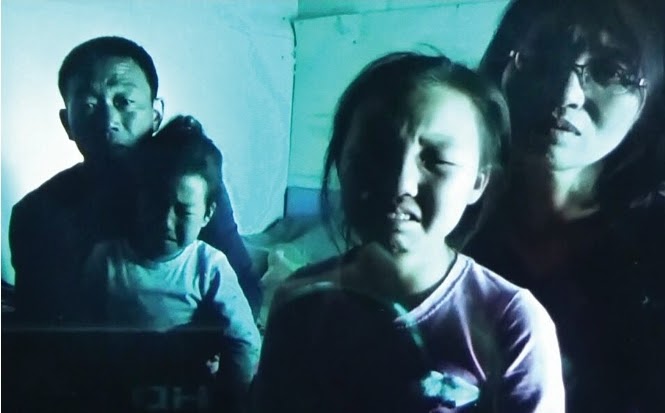
Every step of the hazardous journey poses grave risks and the tension simmers to almost unbearable levels as the family evade police and deal with unscrupulous brokers as they cross borders undercover.
In one particularly harrowing sequence a money grabbing broker leads the family and Pastor Kim – who goes the extra mile and joins them – round in circles on a horrific 10 hour night trek through the humid jungle from Vietnam in Laos until he gets more cash.
Soyeon Lee’s struggle to be reunited with her son is equally dramatic but in a different way. She patiently waits for information on the phone as the Pastor uses his network of contacts to track down the whereabouts of her teenage son. It’s a painful experience as news seeps through in dribs and drabs, not all of it accurate or encouraging.
The history of the secretive nation is interweaved throughout as defector and author Lee Hyeon-seo (The Girl with Seven Names), gives a first hand account of living in North Korea.
From the trauma of witnessing public executions at an early age, the punishments for watching forbidden foreign media, the strange practice of everyone carrying human fecal matter to be used as manure and being brainwashed into using the term ‘American bastards’ to refer to US citizens, she paints a grim picture of a country cut off from the rest of the world.
Disturbing real life footage and animated segments illustrate the regime’s merciless treatment of its own people.
While the contributions of Sokeel Park, from the Liberty in North Korea group and respected author Barbara Demick (Nothing to Envy: Ordinary Lives in North Korea) also provide background and detail on the plight of people trapped in the most repressive state on earth.
It’s a profoundly difficult watch and nigh on impossible not to be moved as the two stories advance in differing directions. Even the stony-hearted might shed a tear.
Pastor Kim emerges as a real life superhero with special powers; strong willed, indefatigable and empathetic to those seeking a perfect world of their own.
Director Gavin puts the spotlight on a forgotten people whose stories would otherwise never be told in what is one of the most powerful and compelling documentaries ever made about North Korea,
 Stephen Kasiewicz