Director: Wes Anderson
Cast: Bill Murray, Benicio Del Toro, Adrien Brody, Tilda Swinton, Léa Seydoux, Frances McDormand, Stephen Park.
Production: United States
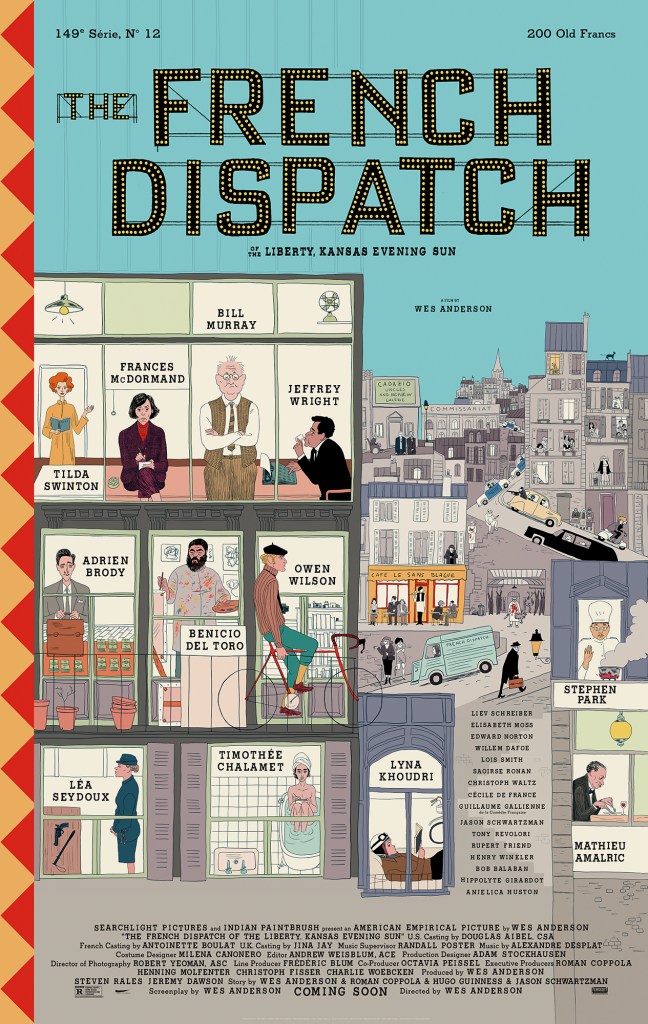
Imagine roaring through the world’s finest art galleries at breakneck speed while hanging off the back of a motorbike. Everything a fuzzy, unfocused haze.
Such is the sumptuous attention devoted to every microscopic detail in The French Dispatch that there is the inclination to pause and contemplate every scene, like viewing a priceless collection of portraits by a revered movement inspiring painter.
Wes Anderson painstakingly constructed around 131 different sets – production designer Adam Stockhausen should also be given a well-deserved mention – to transform a blizzard of ideas into lavish backdrops which form the basis of three different stories in one.
Plot is often unimportant in Anderson’s films as he follows a familiar code, his own kind of Danish Dogme. A maelstrom of pointless verbal jousts and inconsequential denouements, outrageous characters and situations depicted in pointedly alternative formats including segments in black and white, using split screen and in cartoon form.
The fictional French town of Ennui-sur-Blasé provides the canvas, featuring a trio of stories of varying levels of ridiculousness from the final issue of The French Dispatch of the Liberty Kansas Evening Sun magazine.
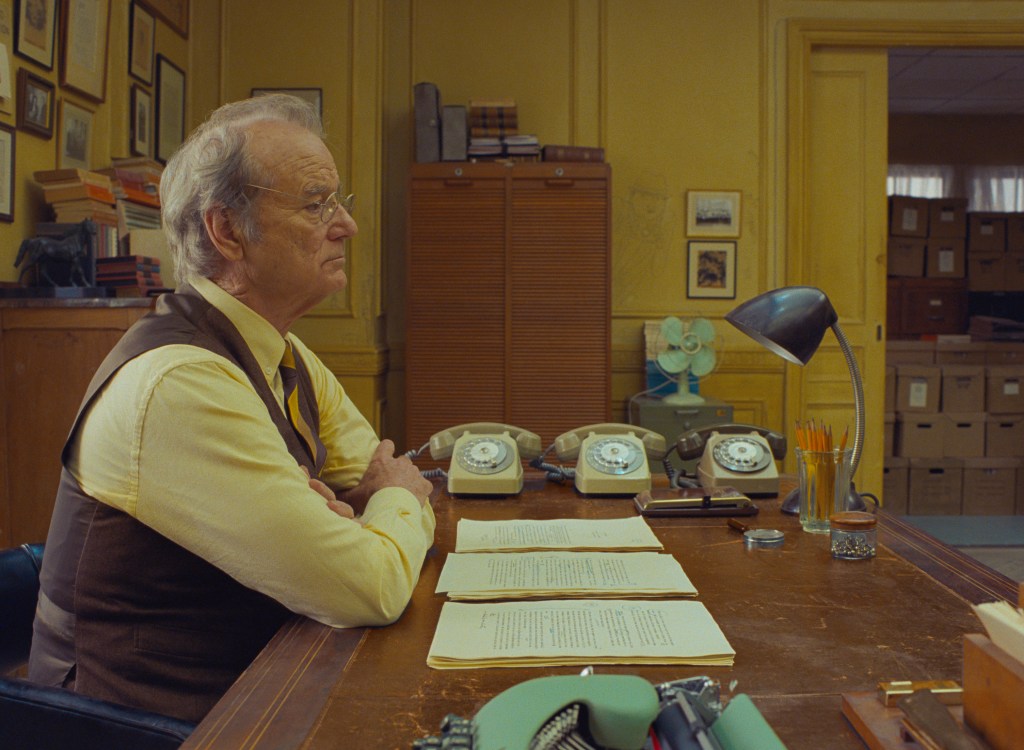
Editor Arthur Howitzer, Jr. (Bill Murray) dies and the imaginary publication set in the 1960s, produces a last edition which serves as an obituary in his memory.
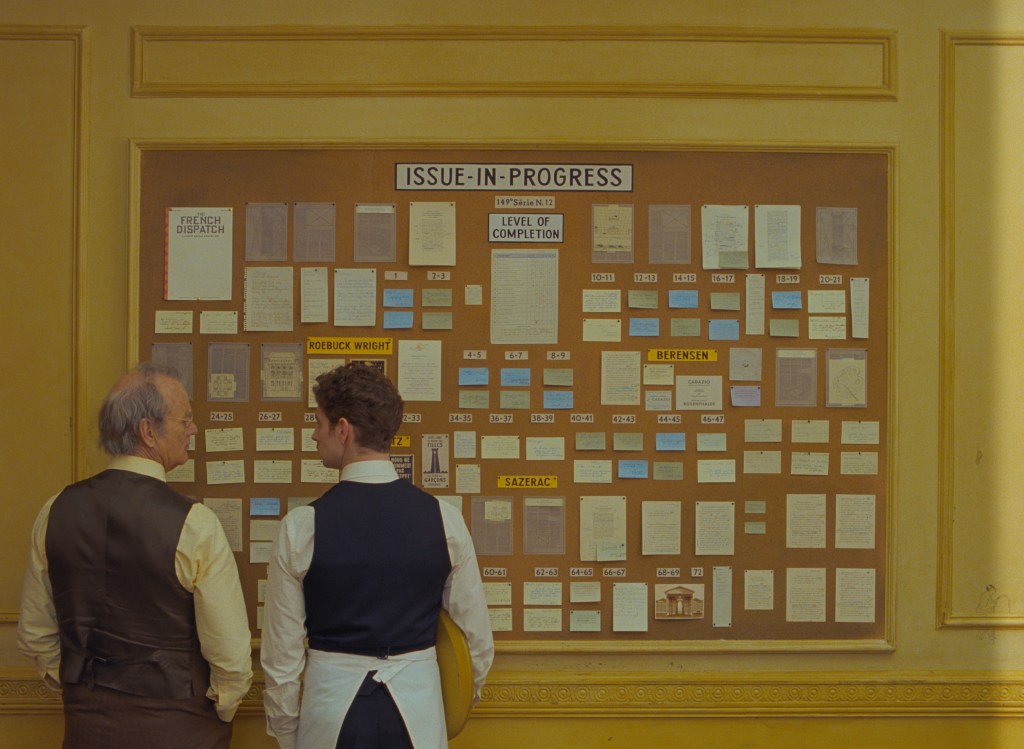
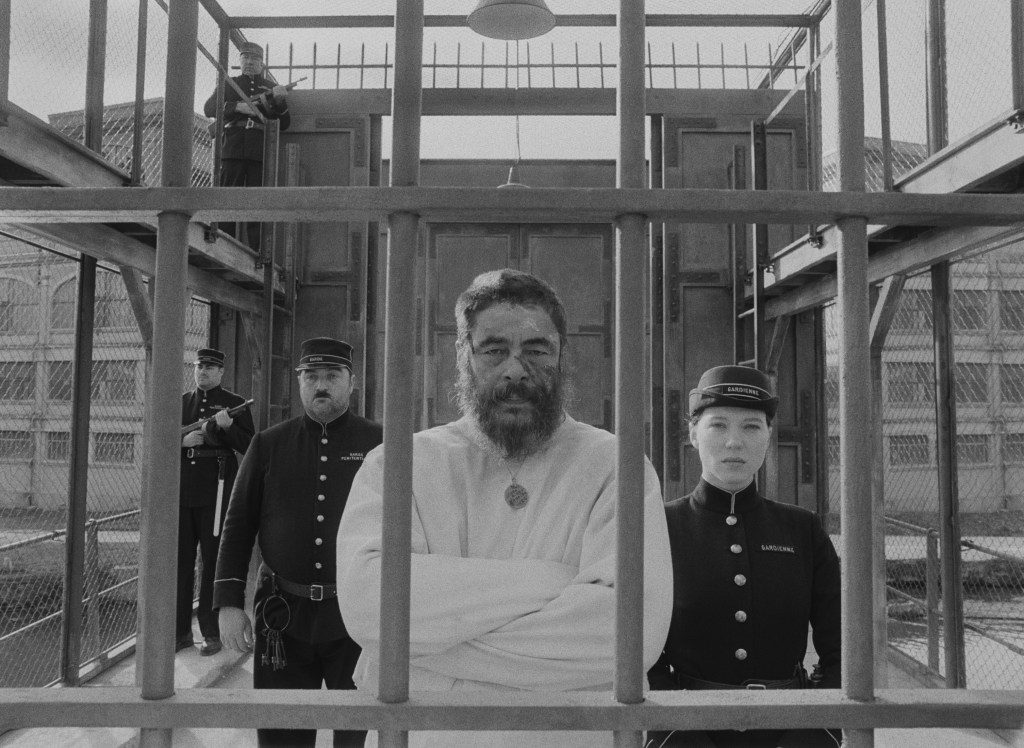
A brief opening account of the sleazy and sordid aspects of the town, which depict it as a crime ridden derivation of hell, serves as an introduction. The first story, a spectacularly comical and entertaining report of a psychotic painter, his inspirational guard and a delusionally enthusiastic art dealer that promotes and sells his work for exorbitant prices provides the majority of the splendidly colourful highlights.
The second two yarns linger on and fail to bring the words to life with the same vivid sparkle as the brief starter and magnificent first course. A political tale involving two young student activists in a vapid romance and a longish ramble about the kidnapping of the police chief’s son and a wondrously artisanal officer turned chef fail to consistently enrapture despite an improbably stellar cast.
Both simultaneously predictable and unpredictable, it is also laugh out loud funny (especially in the first act) and features plenty of hilarious oddities, not least the ‘no crying’ sign in the office of the rather stern editor. Benicio Del Toro and Léa Seydoux provide the best performances as the deranged painter and stony-faced guard who also serves as his unlikely muse, although Murray is predictably excellent in flashbacks as the erratic editor and Stephen Park stands out as the chef with a Midas touch.
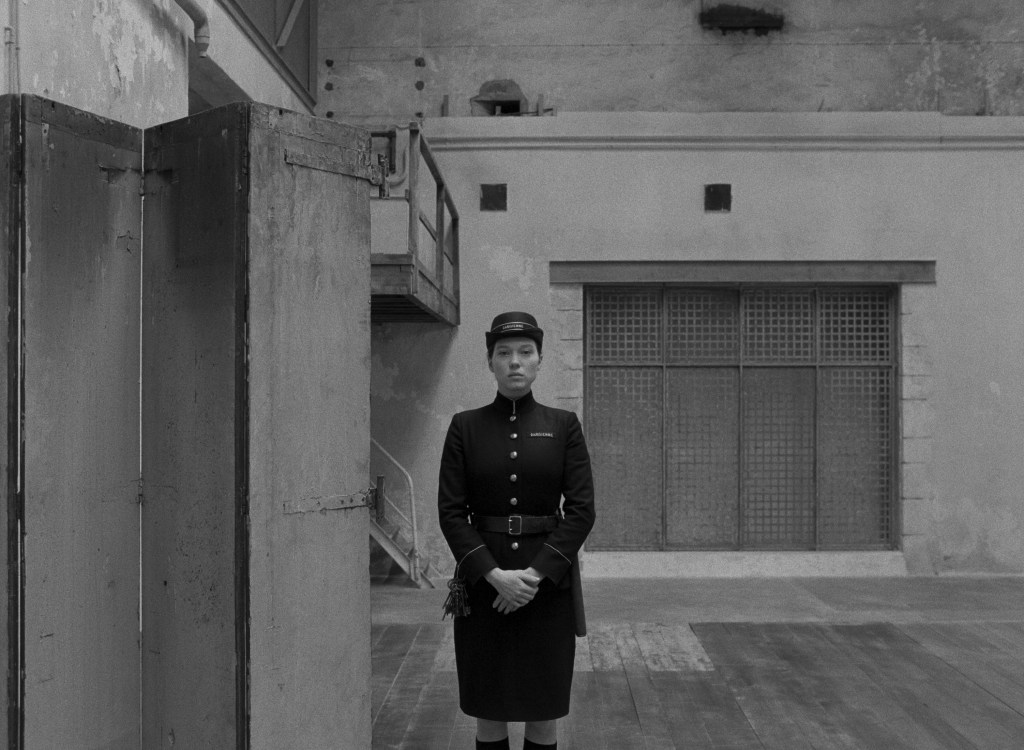
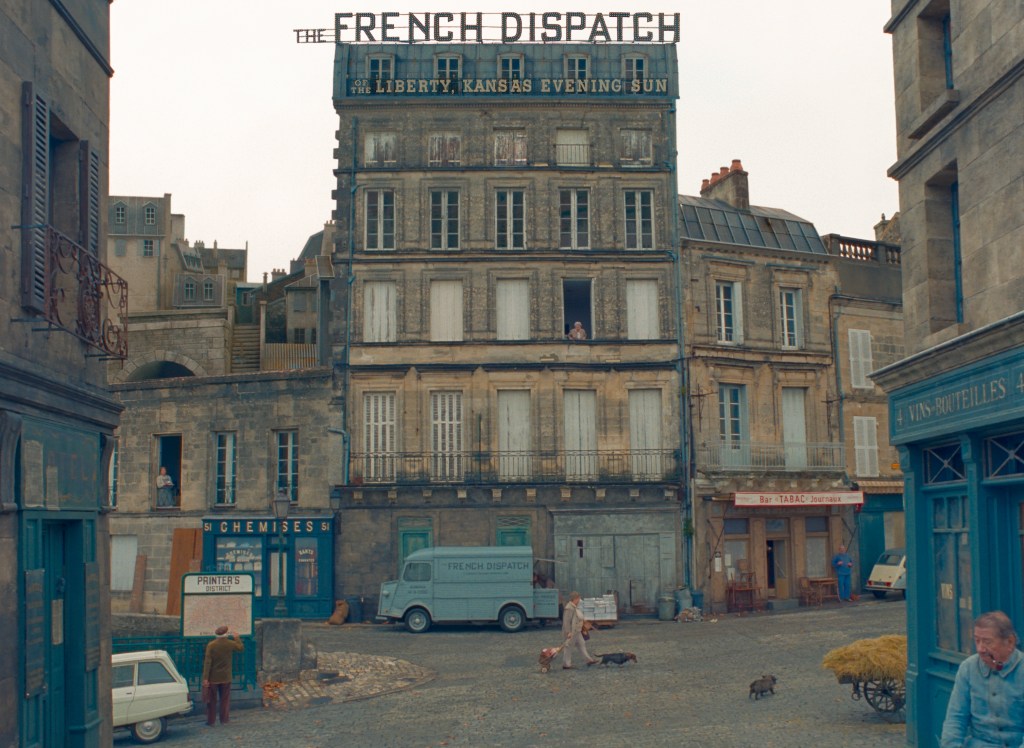
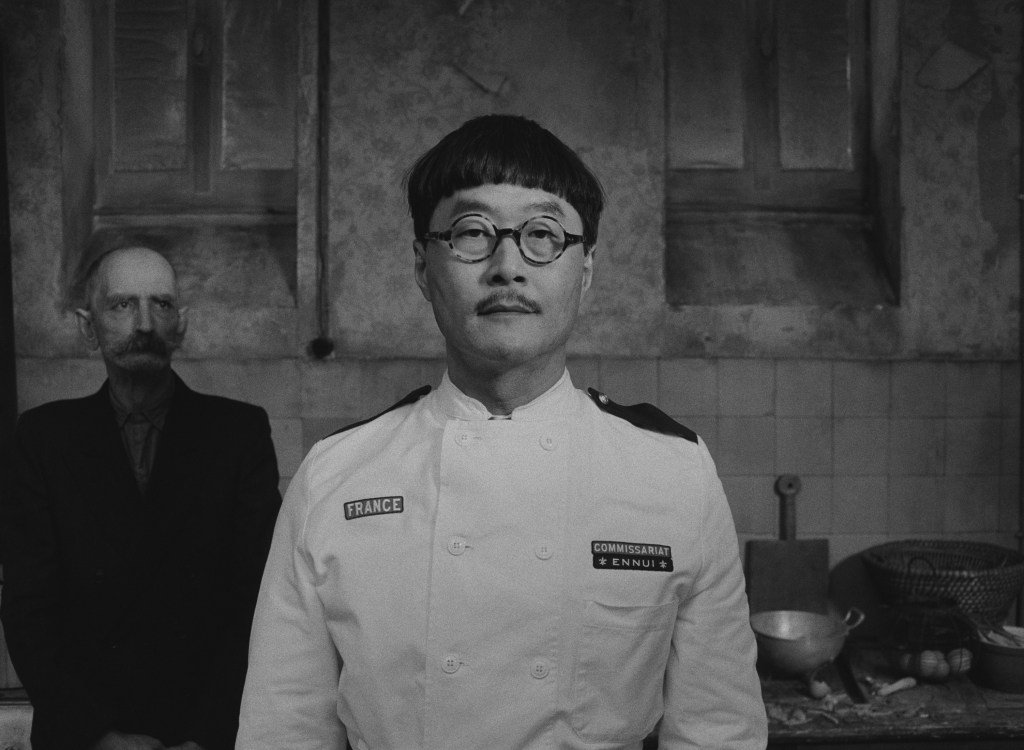
Anderson was inspired by his love of The New Yorker magazine, but his film does not tell us anything about journalism, the mechanics of writing a story or the monotony of collecting information from various sources before chiselling it down into a readable form.
Instead it’s an enthralling wander in a delightful palate of radiant whimsy, which develops like an ultra-fast polaroid picture in reverse, each print viewed for a split second before disappearing.
It can be frustrating and discombobulating as the innumerable details flash by like reckless boy racers but that is surely part of the joy.
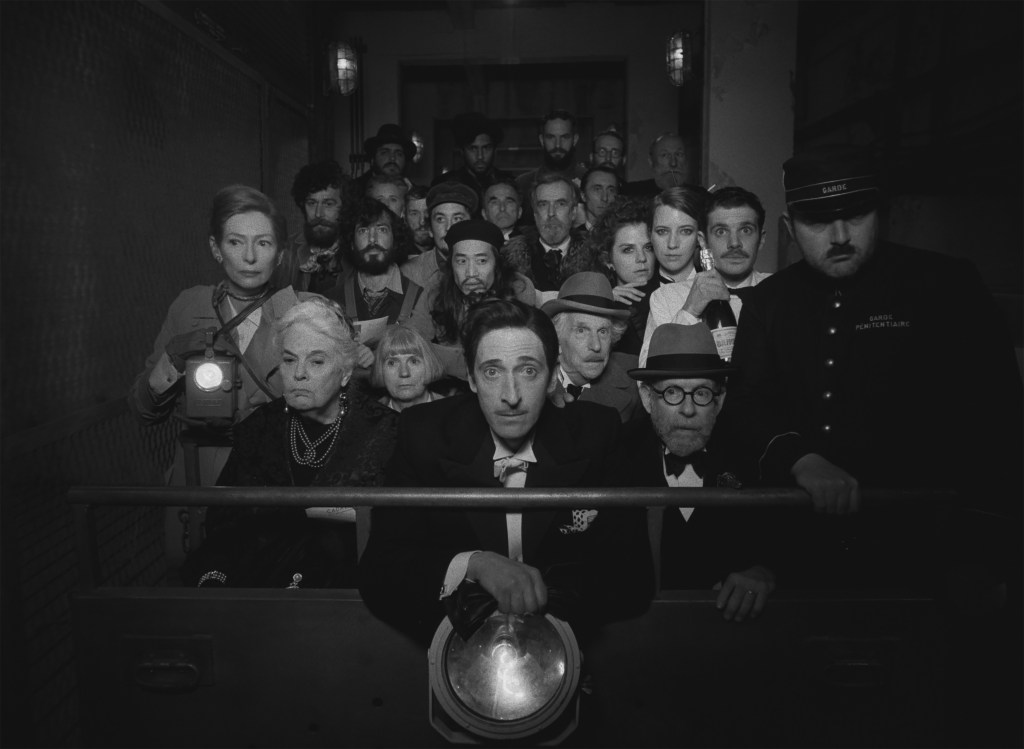
As Hollywood spews out never-ending waterfalls of vacuous, mind-numbing comic book drivel it’s a miracle Anderson is still allowed his own personal stream to devise such works of rich creativity.
Perhaps the price we have to pay is an endless flow of insipid recycled Avengers, Batman and Spiderman movies.They could make a million Marvel and DC whizz, bang, boom boreathons and none would possess the artistry, nuance, and gleeful preposterousness of The French Dispatch.
 Stephen Kasiewicz