Director: Julien Faraut
Cast: Sata Isobe, Hirofumi Daimatsu, Yuriko Handa, Yuko Fujimoto.
Production: France / Japan
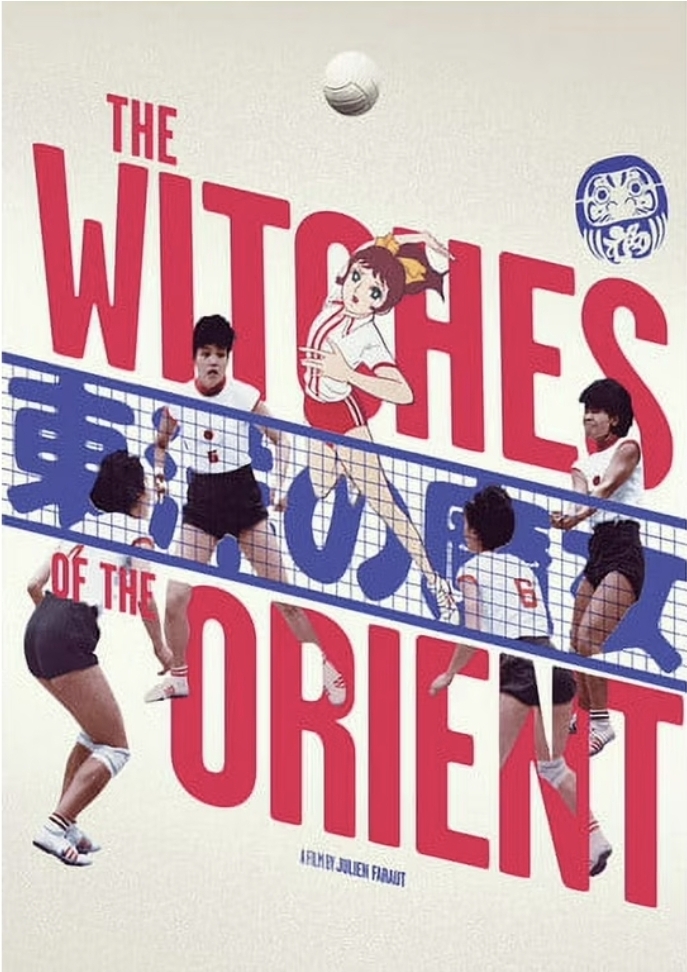
Jump, spike and repeat. Two hundred times without daring to halt for a single breath.
Balls thrown at machine gun speed, directed mercilessly at the body and head. Six days a week, 51 weeks a year.
More of an endurance test than volleyball training, it’s the type of punishing schedule Stanley Kubrick would have admired.
Substitute Full Metal Jacket’s loquacious and fearsome drill instructor for Hirofumi Daimatsu – nicknamed demon – a former lieutenant who almost starved to death and survived malaria and dysentery in the Burmese jungle during the Second World War.
As a coach he displayed the stoicism and hardness of legendary Dundee United manager Jim McLean, almost unable to crack a smile even after the most brilliant of victories.
Ostensibly a documentary about a remarkable group of women that made up a formidable volleyball team in a textile factory in Kaizuka City near Osaka, French director Julien Faraut eschews traditional interview techniques and conventions.
A purposeful directional shift, featuring rotating cameras and slow motion, shows the spectacular rise of the team from the factory in the late 1950s to forming the basis of the Japanese national women’s volleyball team.
Narrated by the players, long sequences are devoted to their everyday lives in modern Japan as they recall their amazing ascent to the pinnacle of the sport.
An unbeaten tour of Europe in 1961, in which they registered a staggering 24 victories across the continent led to the ‘Oriental Witches’ moniker, even though the players didn’t particularly like its negative connotations.
Daimatsu was a sorcerer of sorts, leading the team to claim a landmark victory at the 1962 World Championship in the Soviet Union.
Triumphant colour footage of the 1964 Olympic Games vividly displays the critical moments of the historic gold medal match against an imposing team of bruisers from the Soviet Union.
It’s the hypnotic barbarism of the training which mesmerises the most.
In what might be considered abusive behaviour today, an ashen faced Daimatsu pummels the players with an irretrievable barrage in tremendous archive footage. Despite his brutal methods – the players outline that they sometimes trained all night and met factory colleagues with a good morning and good night at the same time – he was loved and admired.
Faraut channels us down a vortex of unnecessary visual effects, bouts of jarring, unlistenable audio, and focuses far too much on the manga cartoons which immortalized the team. Rather than stylised anime, it is the actual footage of Japan stunning the Russian crowd in Moscow and the tears that followed the Olympic gold which captivate the most. Haphazard editing and incessant cuts to manga serve little point or purpose. Nevertheless, it manages to be both absorbing and moving.
Worked like grizzled marines, the witches ruled the world and set an unbeaten record in excess of 200 games, their phenomenal achievements still celebrated in Japan just now as it holds the Olympics again.
@skasiewicz.bsky.social
 Stephen Kasiewicz