편재하는 손흥 민
Jul 3, 2019
Suwon, South Korea
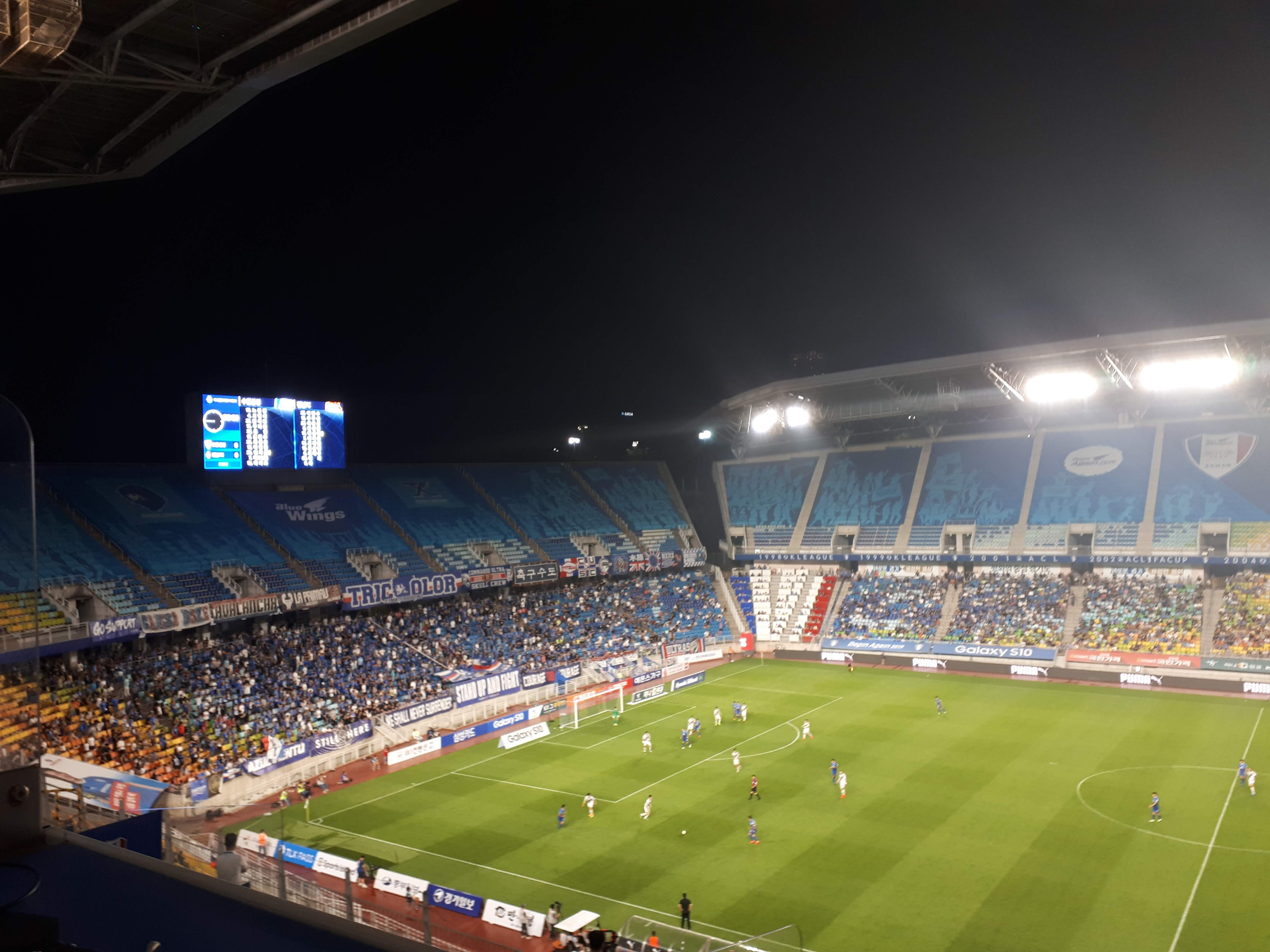
Suwon World Cup Stadium
In a nation preoccupied with corporate sponsored baseball teams, one sporting figure is omnipresent.
While the batting averages and pitching statistics of the Doosan Bears, LG Twins, Samsung Lions and Kia Tigers are frenzied talking points throughout the marathon Korea Baseball Organization (KBO) season, Son Heung-min is in an altogether different sporting stratosphere.
He’s not only the face of football, but one the most recognisable faces in all South Korea.
Destined for stardom from an early age, his rise from the Bundesliga to one of the best players in the world at Tottenham Hotspur has been accompanied by a highly audible cacophony of support from millions in his homeland.
His meteoric ascent is perhaps more visible than ever before and not without reason.
Many predict that the Korean wave, in all its varied forms, is on the wane.
Yet with Son sprinting clear, the country continues to be a pervading global influence, punching well above its weight and not just in sport.
Government sponsored attempts at soft power helped create the irrepressible juggernaut that is K-Pop, and in turn is responsible for the undoubted success of acts like BTS and Blackpink (both of whom are actually pretty good).
Film director Bong Joon-ho won the Palme d’Or for the brilliant social commentary Parasite this year and Super Son became just the second Korean to feature in a Champions League final.
Of course, former Manchester United midfielder Park Ji-sung is still universally revered and even has a street named after him in his hometown of Suwon. A dubious if still noteworthy honour.
Equally, Cha Bum-kun, arguably the first true Asian trailblazer in Europe at Eintracht Frankfurt (where his image is still visible throughout the German city) and Bayer Leverkusen, will always be heralded for his contribution to football here after a long and fruitful career in the Bundesliga in the 1980s.
While many are hailing Valencia playmaker Lee Kang-in as Son’s successor, especially after the 18-year-old won the Golden Ball for best player at the Under-20 World Cup in Poland, the Spurs striker is firmly entrenched as South Korea’s eminent sporting superstar.
Sonny is everywhere. Tottenham shirts, both knock-off and rip-off, are visible throughout Seoul and beyond; whether it’s little kids, proud football enthusiasts or old grannies with his name plastered on their backs. His ever-present smile beams out from mobile phone shops and from the side of buses, while an annoyingly catchy advertisement for ice cream cones is played repeatedly on television, cinemas and online. He waves the chocolate sprinkled snacks around like maracas, dances playfully, even bursting out laughing, and re-enacts a trademark handshake. I even found myself singing the jingle for the Super Cone in the shower over the weekend.
In a country which adores its sporting heroes and elevates them to improbably high peaks – the women’s curling team were national news after clinching silver at the Winter Olympics last year and comically advertised everything from pork sausages to vacuum cleaners – Son has been lifted to the top of every mountain and inspired thousands of youngsters to start kicking a ball around rather than picking up a baseball bat and glove.


Humble, affable and unwaveringly positive, he endeared himself to the nation after breaking down in tears in front of President Moon Jae-in after South Korea’s World Cup exit last year. Conversely, his child like glee at winning the Asian Games, which cynical observers claimed was solely due to the military exemption it garnered, was a palpable show of patriotic and genuine enthusiasm.
The pilgrimage to the gleaming new Tottenham Hotspur Stadium is already in full swing with South Korean flags sprinkled around the North London amphitheatre to proudly cheer on a national hero.
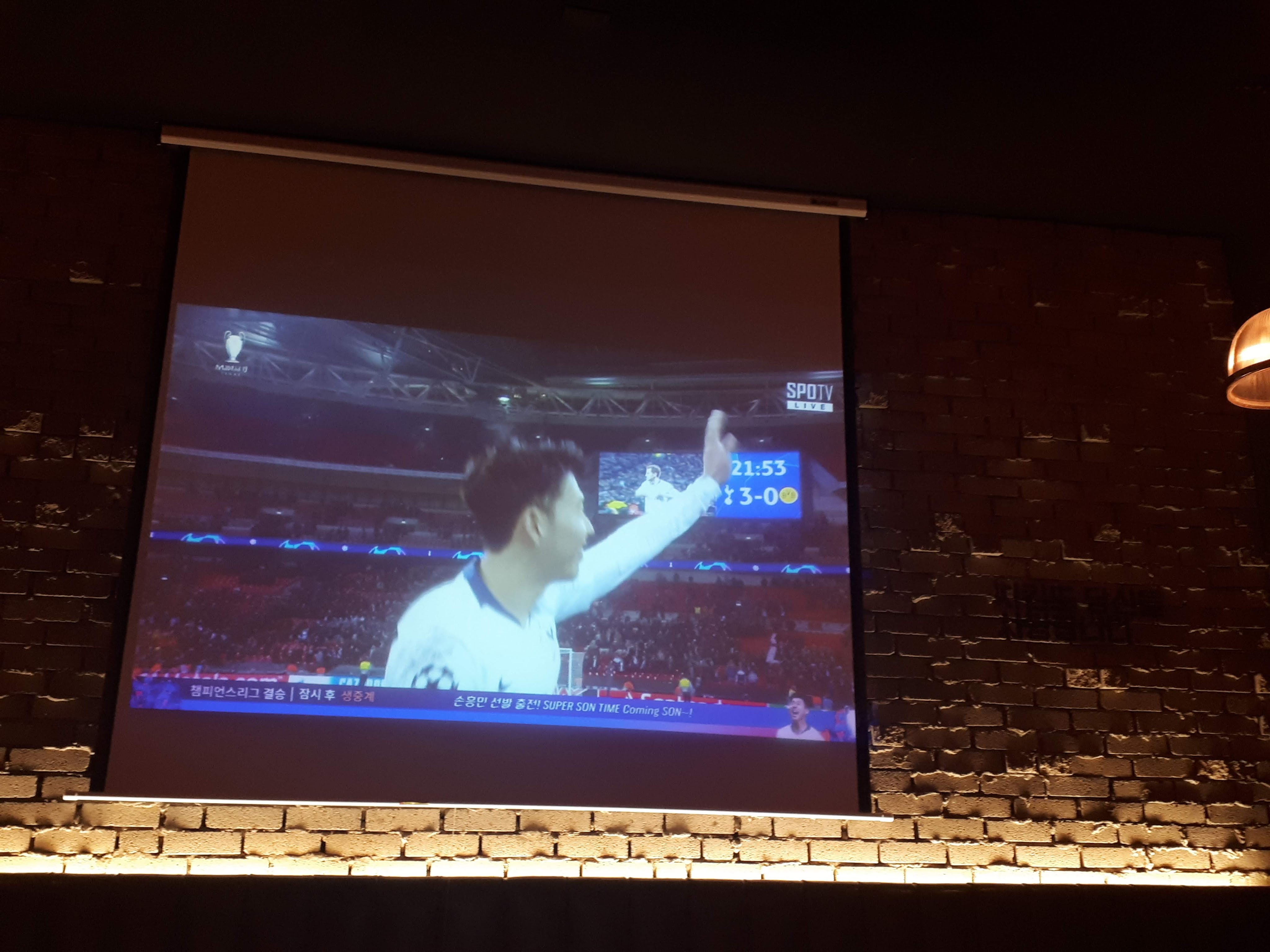
The bucket list trip to London is not exactly cheap, so most settle for watching him on a variety of screens in this wi-fi wonderland. Heads bowed glued to mobiles, large scale projections in the scores of bars and restaurants and millions watching from the comfort of home.
Naturally every Spurs game is nationally televised, and Son’s image is permanently in a corner of the screen throughout pre and post-match coverage, and alongside the graphic with the match score and time during the game itself. His every movement more important than the game; in fact, he is the game, or at least that how it seems here.
Thousands gathered for public outdoor screenings of the Champions League final, while others packed pubs despite its soporific 4am kick-off time. A host of famous faces from the world of television, comedy and sport wished him well before kick-off in a video montage on one of the national broadcasters – his grand status confirmed and reaffirmed.
Ultimately the final resulted in bitter disappointment. Yet the volume rose from the commentators (including former Spurs left-back Lee Young-pyo) and those watching, fixated across the peninsula whenever he touched the ball, let alone did anything meaningful in an anticlimactic game which at least provided joy for the nation’s sizeable Liverpool following. Not everyone is enamoured solely with Son.
Regardless, he is still cherished like an emblem of the country’s current prosperity, a one-man advertising machine; his clean-cut look perfect for an appearance obsessed society.
Most would be pleased to catch just a mere glimpse of him in the flesh. Every national team game quickly sells-out, most recently the single goal victory against Australia in front of just more than 52,000 worshippers in the port city of Busan early last month.
Socceroos international Adam Taggart, a K-League stand out with the Suwon Bluewings this season, faced off against Son and was left in no doubt about his presence and popularity. The domestic league lags considerably behind the EPL in popularity, but attendance figures are steady at around 8,000 per game and the domestic fanbase is loyal. The Samsung backed Bluewings have one of the more vocal supports in the league, with sets of ultra-style tifosi providing a cauldron of noise which would not be out of place in Serie A.
Taggart, who has seven goals in 15 games in one of Asia’s most challenging leagues, was privileged enough to share the pitch with Son.
The 26-year-old, once of Fulham and Dundee United on loan, said: “I can’t think of anyone who would not respect him as a player.
“You look at him from afar for Tottenham and think: ‘Wow’.
“Now I am involved in Korean culture it is just a given that all Korean players are motivated and give everything on the pitch.
“He has progressed in Europe quickly and done really well. I can see why all the Korean players that have gone to Europe do well.
“They have all the basics: a high work rate and technical ability.
“Son really seems to get into the right spaces, and he is someone that everyone admires.
“It was fantastic to play with him because after being involved in football in Korea, I know a bit about the environment and culture here I can understand how he has got where he is now.
“It was nice to come up against him.”
Taggart achieved what most Korean football fans can only picture in dreams, a personal audience with the Son king.
 Stephen Kasiewicz