December 10-12, 2009.
The ride up the Floibanen funicular railway gives little indication as to the majestic view of Bergen which awaits.
Ascending smoothly on a cable car carriage through tunnels carved into a mountain side at a 26 degree angle is a peculiar yet unique way of travelling.
It takes less than 10 minutes to reach the summit of the 1050 foot high Mount Floyen and at its peak the city emerges.
Surrounded by seven mountains and seven fjords the Bergen landscape is utterly spectacular.
Houses rest precariously on hills, buildings seem to float on the sea and roads zig-zag in and out of Norway’s second biggest city.
It is a breathtaking introduction to a location which aside from being aesthetically pleasing, possesses a multitude of sights and attractions.
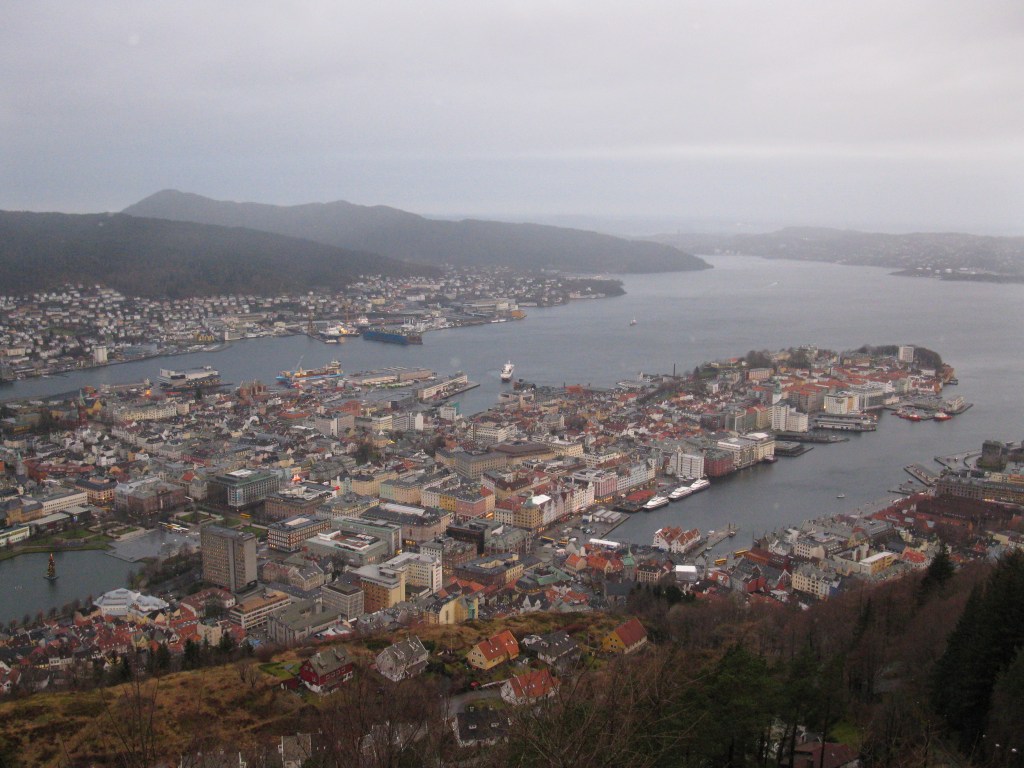
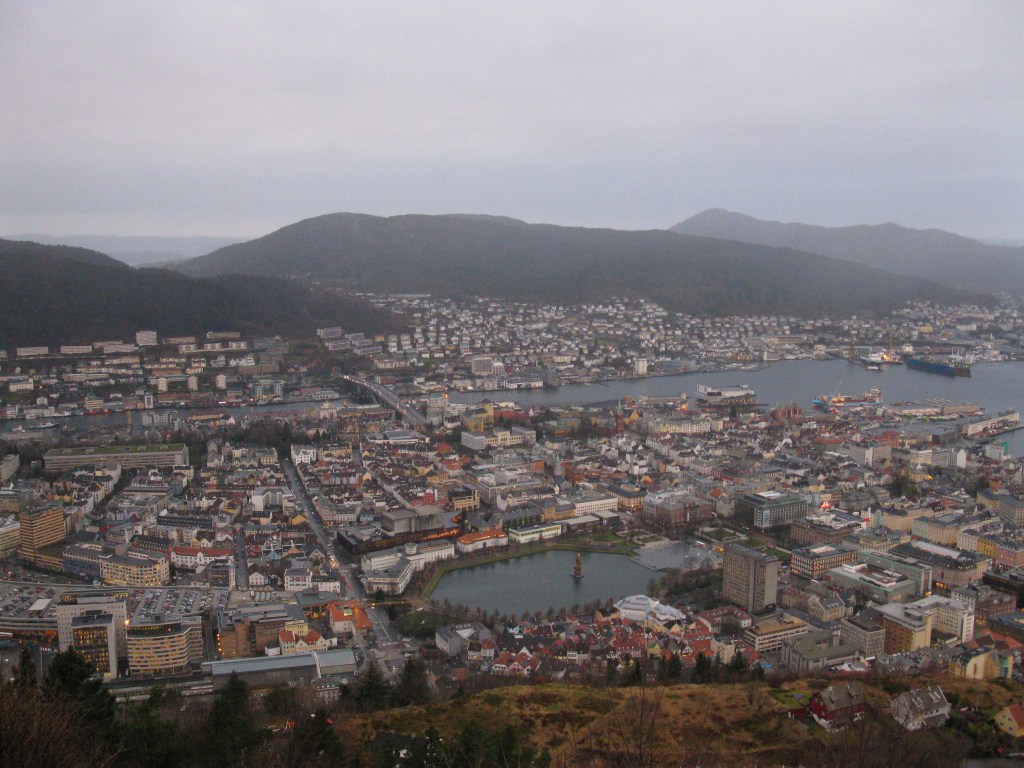
Bergen is easily accessible from Aberdeen and I arrived in just one hour and 20 minutes on a direct Eastern Airways flight from the Granite City.
Despite its relatively small population of just over 250,000, Bergen has the feel of a much bigger city.
Everything is within easy walking distance and you won’t find yourself looking at a map for too long due to its uncomplicated layout.
Despite the cold and rain of a typical December day, city guide Eirik Brudvik illuminated the gloom with a brief tour of the central point of Hordaland county.
Our first stop was the fish market at Torget, where the friendly stallholders gave out samples of whale meat, various varieties of smoked salmon and caviar.
The whale was actually preferable to the bitterness of the caviar but it was the quality and flavour of the salmon which lingered longest on the taste buds.
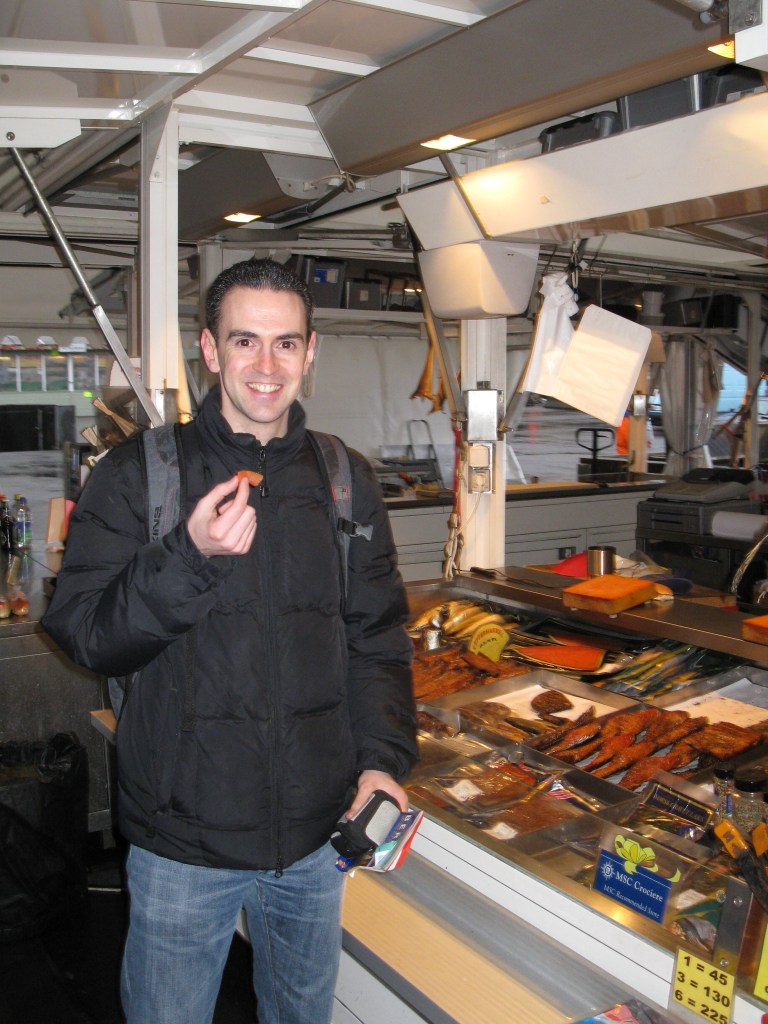
There has been a conscious effort to preserve the historic areas of the city and it is perfectly illustrated in Bryggen.
Bergen’s oldest district lies on Vagen harbour and has been a trading point for over 800 years.
Although ravaged by fire on several occasions, Bryggen is instantly recognisable for its coloured wooden buildings and narrow alleyways.
In the 14th century it became a trading point for German merchants and formed part of the Hanseatic League, shipping dried cod across central Europe.
Now it features several modern businesses, shops and restaurants but still retains the façade and feel of a bygone era.
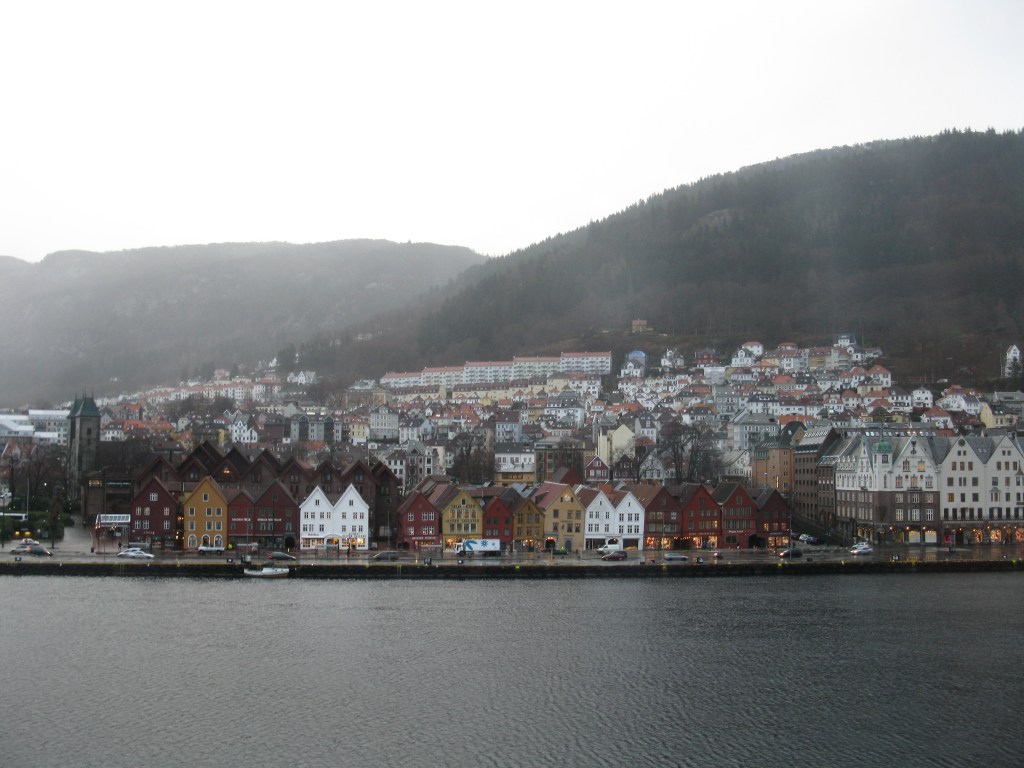
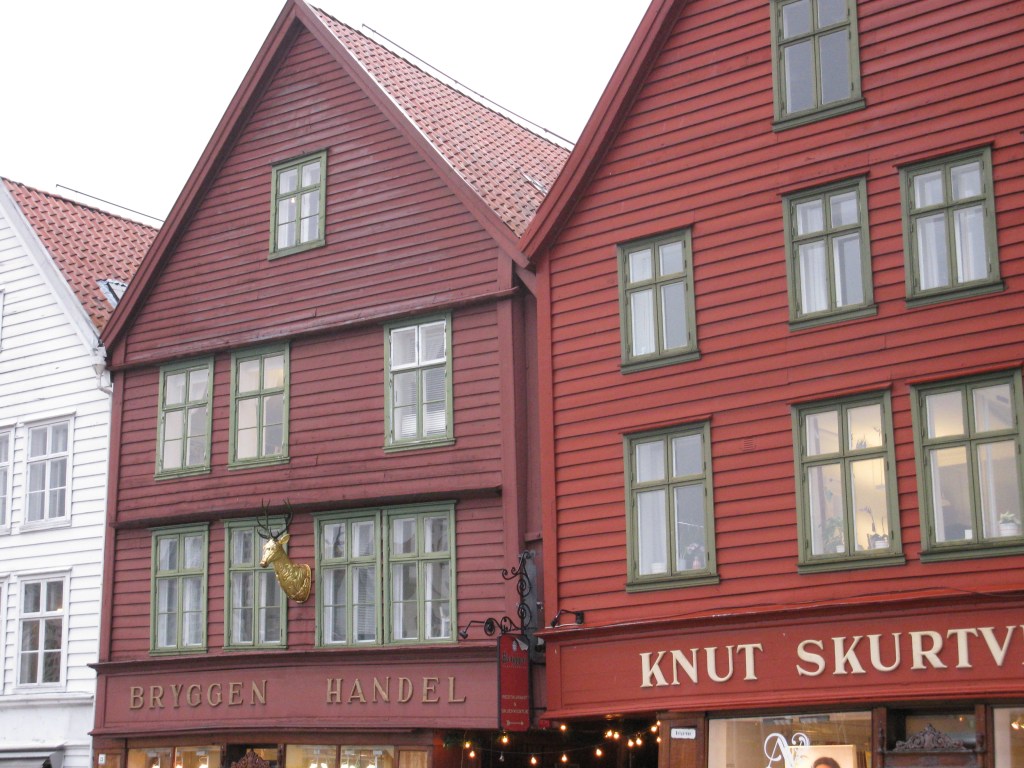
I had a perfect eye level view of Bryggen from the balcony of my hotel room at the excellent harbour side Clarion Admiral Hotel (C. Sundtsgate 9).
After a prolonged period of admiring the stunning landscape I ventured into the city centre with a wallet full of Kroner.
Knowing the expense of eating and drinking in Norway after previous trips to Tromso and Oslo, I was prepared for the high prices across the city.
I resisted the temptation to buy anything after passing a plethora of shops, both Norwegian and international, along Strandgaten, which was tastefully decorated in the lead up to Christmas.
It turned out to be a wise move when the cost of a reindeer main course at the subtly stylish Boha restaurant (Vaskerelven 6) weighed in at £35.
Bearing a distinct similarity to venison this particular Norwegian culinary speciality is worth trying regardless of the price.
Bars are plentiful in the heart of Bergen and I tried the locally brewed Hansa beer, a relative bargain at £5.50 a pint, at the intimate, penguin-themed Pingvinen (Vaskerelven 14).
The Garage (Christiesgate 14) is a renowned rock music venue in the city and although the black metal genre originated in Norway, London-based indie band Hatcham Social performed live the night I was there.
Bergen prides itself on being the gateway to Norway’s fjords but rather than risk contracting pneumonia by going on a boat trip on a decidedly chilly winter morning I opted to further explore in and around the city centre.
One way to save money and avoid paying extortionate prices is to purchase a Bergen card which offers free entry and significant discounts to a number of city attractions.
At £20 for a 24-hour card and £27 for 48 hours it provides good value for money and I used it to visit the Bergen art museum.
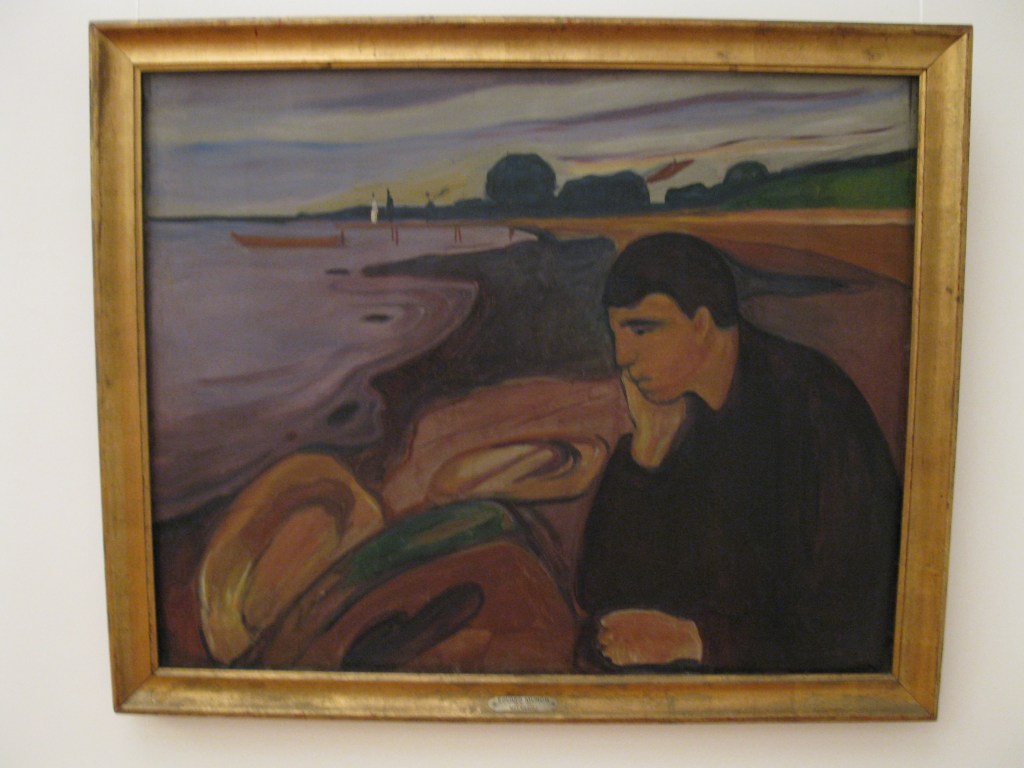
Spread over three buildings close to the picturesque Lille Lungegardsvann lake, the Lysverket holds paintings by Pablo Picasso and Swiss painter Paul Klee, while the Rasmus Meyer Collection houses a particularly impressive selection of the works of Edvard Munch.
Munch (1863-1944) is unquestionably Norway’s most famous painter and I found ‘Evening on Karl Johan Street’, ‘Woman In Three Stages’ and ‘Melancholy’ most striking.
A stroll into the main square at Torgalmenningen brought an unexpected discovery.
Schoolchildren from around Bergen had created a miniature replica of the city in gingerbread at the Pepperkakebyen marquee.
It was festive and authentic if not slightly surreal and sickly sweet but intriguing nevertheless.
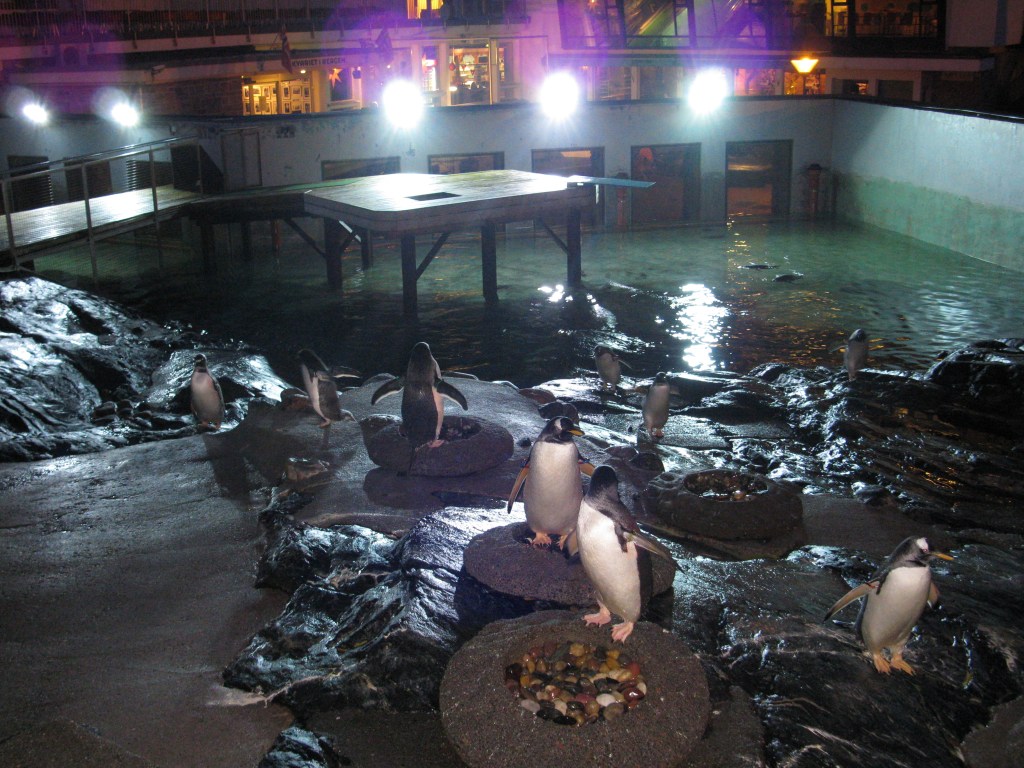
At the Bergen Aquarium I was introduced to a penguin named after Brann Bergen forward Erik Huseklepp.
Scotland supporters may remember (or want to forget) that the attacker scored Norway’s fourth goal as they thrashed George Burley’s side in a World Cup qualification match in Oslo last August (2009).
Thankfully meeting the player’s penguin equivalent was a far more pleasant experience.
There is always something comical about observing penguins tiptoe around with their wings held back and Erik and his friends certainly provided the highlight of aquarium which also houses seals, various reptiles and a whole sea of fish.
After dinner at Italian restaurant Stragiotti (Vestre Torvgate 3) – incredibly everywhere else was fully booked on a Thursday night – I headed back to the hotel for one last gaze at the scenic beauty of Bryggen before making the short journey across the North Sea to Aberdeen the next day.
Published in the Press and Journal (Scotland) newspaper in 2010.
 Stephen Kasiewicz